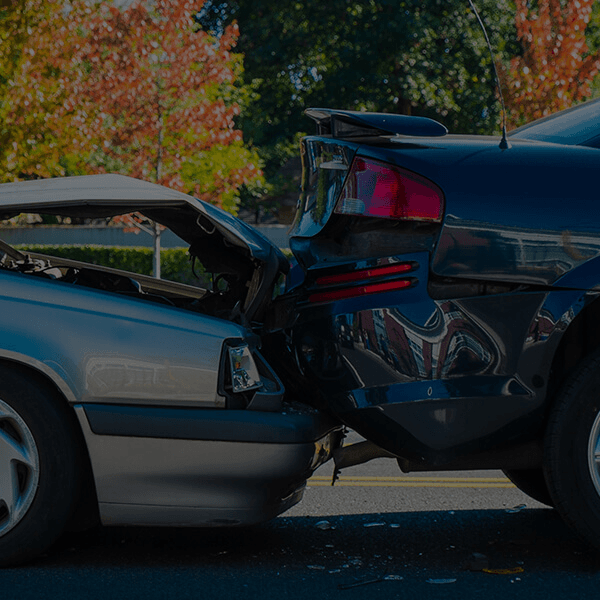
Do You Need a Lawyer After a Car Accident?
Not every fender-bender needs a lawyer. But many crashes that seem minor at first turn out to be more serious. Neck and back injuries, concussions, and other injuries may not show symptoms right away. Meanwhile, an adjuster may call asking you to describe the crash on tape, or offer a check before you know how badly you're hurt.
It makes sense to talk to a lawyer if:
- You were hurt and needed medical treatment
- The other driver's insurance company is disputing who was at fault
- Your injuries are keeping you out of work
- An adjuster is pressing you for a recorded statement or a fast settlement
- The crash involved a commercial vehicle, a rideshare, or an uninsured driver
- Someone was killed or seriously injured
A consultation with us is free, and there is no obligation. If we take your case, you owe no fee and no costs unless we recover money for you.
What to Do After a Car Accident in Florida
The steps you take right after a crash can protect your health and your claim:
- Check for injuries and call 911: Get medical help for anyone who is hurt and ask for police to come to the scene. A police crash report is an important record of what happened.
- Move to safety: If you can do it safely, move out of traffic and turn on your hazard lights.
- Document the scene: Take photos of the vehicles, the damage, the road, traffic signals, and your injuries. Get the names and phone numbers of witnesses.
- Exchange information: Get the other driver's name, phone number, driver's license, license plate, and insurance information.
- See a doctor within 14 days: For Florida's personal injury protection (PIP) coverage to pay your medical bills, you generally must get initial medical treatment within 14 days of the crash. Go even if you feel fine; some injuries take time to show up.
- Be careful with insurance companies: Report the crash to your own insurer and meet your policy's requirements, but think twice before giving a recorded statement to the other driver's insurer or signing anything it sends you. What you say can be used to reduce your claim.
- Call a lawyer: The sooner a lawyer gets involved, the sooner evidence such as video footage and vehicle data can be preserved.
Florida Car Accident Laws You Should Know
No-fault insurance and PIP
Florida is a no-fault state. The owner of every car registered in Florida must carry $10,000 in personal injury protection (PIP) coverage. After a crash, your PIP (or a family member's) generally pays 80% of your reasonable, medically necessary medical bills and 60% of your lost income, up to the policy limit, no matter who caused the crash. Medical benefits up to the full $10,000 are available only if a medical doctor, osteopathic physician, dentist, physician assistant, or advanced practice registered nurse finds that you had an emergency medical condition. Without that finding, PIP pays no more than $2,500 for medical care.
When you can sue the at-fault driver
PIP rarely covers everything. To recover for pain and suffering from the at-fault driver, Florida law requires that the crash caused a permanent injury (within a reasonable degree of medical probability), significant and permanent scarring or disfigurement, a significant and permanent loss of an important bodily function, or a death. Even if your injury does not meet that standard, you can still claim from the at-fault driver the medical bills and lost income that PIP does not cover.
Shared fault
Florida uses modified comparative negligence. If you are partly at fault, your recovery is reduced by your share of the blame. If you are found more than 50% at fault, you generally cannot recover anything from the other driver. Insurance companies know this rule well, which is why they often argue that you caused the crash.
Deadline to file a lawsuit
For car accidents that happened after March 24, 2023, Florida generally gives you two years from the date of the crash to file a lawsuit. Crashes on or before that date generally have four years. If you miss the deadline, you can lose your claim entirely. Claims against a government agency also have notice requirements that must be met before a lawsuit can be filed, so talk to a lawyer as early as possible.
Uninsured and underinsured motorist coverage
Florida generally does not require drivers to carry bodily injury liability insurance, which pays for injuries they cause to others, so the at-fault driver may have little or no coverage for your injuries. If you have uninsured/underinsured motorist (UM) coverage (it is optional in Florida), it can pay for your injuries when the at-fault driver has no insurance or not enough. A family member's policy may also apply. We review every policy that may apply to your crash.
Common Types of Car Accidents We Handle
- Rear-end collisions
- T-bone and intersection crashes
- Head-on collisions
- Sideswipe and lane-change crashes
- Drunk and impaired driving crashes
- Distracted driving and texting crashes
- Hit-and-run crashes
- Rideshare crashes (Uber and Lyft)
- Crashes with uninsured or underinsured drivers
- Multi-vehicle pileups
What Compensation Can You Recover?
Every case is different, but compensation in a Florida car accident claim can include:
- Past and future medical expenses
- Lost wages and lost earning capacity
- Pain and suffering
- Mental anguish and emotional distress
- Loss of enjoyment of life
- Scarring and disfigurement
- Property damage to your vehicle
Pain and suffering, mental anguish, loss of enjoyment of life, and scarring can be recovered from the at-fault driver only if the injury meets Florida's injury standard described above. Medical bills and lost wages can be recovered to the extent PIP has not paid them.
The value of a claim depends on the seriousness of your injuries, the cost of your treatment, how the injuries affect your work and daily life, who was at fault, and how much insurance coverage is available. We look at all of these factors before advising you on any settlement offer.
How Our Car Accident Lawyers Work Your Case
- Free consultation: Tell us about the crash and your injuries. We'll tell you in plain terms whether you have a claim and what comes next.
- Investigation: We gather the crash report, photos, witness statements, video, and medical records, and we identify every insurance policy that may apply.
- Medical care and documentation: We help you keep track of your treatment and the bills and records that prove your damages.
- Demand and negotiation: We present your claim to the insurance company and negotiate for a fair settlement.
- Lawsuit and trial if needed: Some insurers won't make a fair offer until a lawsuit is filed. When that happens, we file suit and get your case ready for a jury.